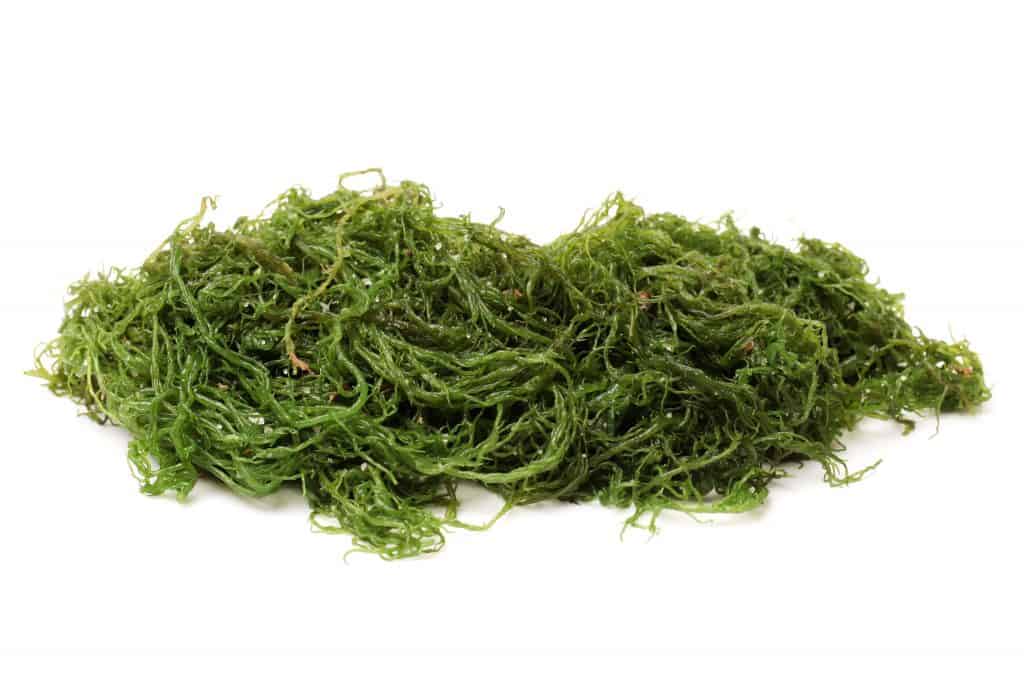
Fermented kelp. Fermented seaweed. I can almost hear you ask: Do you expect us to eat that? Well before you move on let me assure you one thing: fermented seaweed tastes great. And it is super healthy too.
Indeed, sea vegetables and seaweeds like kelp have been prized by many cultures since ancient times.
So I urge you to try out this fermented seaweed recipe. I promise you, you won’t regret it. People with hypothyroidism who ideally need to avoid the cabbage family can offset its effects by adding iodine-rich sea vegetables to crucifer-based ferments.
What is kelp?
Kelp or seaweed is a brown-green marine alga that grows in the sea. It is often known as sea kelp or Kombu (the Japanese word for dried sea kelp) and is typically found in the shallow parts of the ocean where the sun rays warm the sea bed.
Kelp has no roots to attach itself to the seafloor, so it absorbs nutrients from the water and makes its food using photosynthesis. It is rich in iodine, vitamins, minerals and other phytonutrients making it one of the most nutritious superfoods out there.
Today, kelp is available in the form of pills, powders, tinctures, and even complete meals.
Here are some of the potential health benefits of kelp.
Benefits of seaweed or kelp
According to Cygnet Brown’s book, Help from Kelp, we can expect the following benefits from kelp seaweed:
Anti-cancer
Kelp and other types of seaweed are extremely rich in antioxidants and phytonutrients. Antioxidants fight free radical damage caused by rogue molecules that are responsible for tumor formation.
Consuming seaweed could lower the risk of breast and colon cancer. In countries like Japan, where people consume seaweed in large amounts, there are lower incidences of both these cancers. Naturally, we need more studies to prove it for a fact, but early research seems promising.
Heart-healthy
Seaweed is potentially good for the heart. The antioxidants found in seaweed like kelp fight free radical damage and also reduce cholesterol. In Eastern countries with higher seaweed consumption, the statistics of heart disease are much lower compared to those in other parts of the world.
And because kelp originates in the sea, its antioxidants are far more powerful than those found in fruits and vegetables.
Reduces iodine deficiency
Iodine deficiency is a leading cause of thyroid-related problems. Kelp is rich in iodine and it is also easily absorbed by the human body. Many people diagnosed with a sluggish thyroid or hypothyroidism have benefitted from regular consumption of kelp.
Aids in weight loss
Iodine deficiency also impedes metabolism rate which can, in turn, cause weight gain or obesity. By maintaining the iodine levels in the body, one can speed up metabolism and prevent unhealthy weight gain.
Enhances beauty!
Kelp, thanks to the host of nutrients it contains, may result in better-looking skin and shinier hair.
Print
Fermented Seaweed Recipe or Kelp Kraut Recipe
- Total Time: 1 Week
- Yield: Makes 64 servings 1x
Description
This fermented kelp or fermented seaweed kraut delivers both in flavor and nutrition. You can use any sea weed but this recipe uses kombu or kelp which is readily available in Asian stores or even the Asian section of your neighborhood grocery store.
Important tip – make sure you source your kelp from a clean source.
Kelp does not have roots, and it absorbs all its nutrition from the sea water and that also includes all that washes and blows from the land. So ask your vendor about the source of your kelp.
Ingredients
- 1 packet Starter culture mixed in a cup of filtered water (Optional)
- 1 large cabbage, shredded
- 3 carrots – grated
- ½ white onion – sliced thin
- 1 apple – washed and sliced thinly
- 1 cup kale or spinach leaves, chopped
- 2 tbsp chopped dried or fresh parsley
- 3–4 tbsp organic sea kelp seasoning
- 2 tsp sea salt
- ½ cup kombu shredded
Instructions
- Start massaging finely shredded cabbage with salt. This process takes time – about 10 minutes. Continue massaging until the cabbage releases water.
- Add the shredded carrots, sliced apple, and chopped kale or spinach to the cabbage.
- Continue massaging until all vegetables are well-mixed.
- Now add the sea kelp seasoning, parsley, and kombu to the vegetables. Mix well.
- Divide the mixture equally into four 1-quart jars and press down the vegetables using a spoon or a potato masher.
- Also, divide the starter culture (if using) into the four jars. Add filtered water on top leaving about 2 inches of headspace for bubbling and expansion.
- When the vegetables are done fermenting, typically after a week, place them in the refrigerator. They last for about 9 months.
- Prep Time: 30 minutes
Conclusion
Feel free to experiment with different sea vegetables of your choice. You can choose from dulse (this is a coarse powder), nori, wakame, or sea palm. Always start small if you are unfamiliar with seaweed. Add just a teaspoon of chopped seaweed or powdered dulse to a quart of ferment. This will give you an opportunity to see whether you like the taste.

Leave a Reply